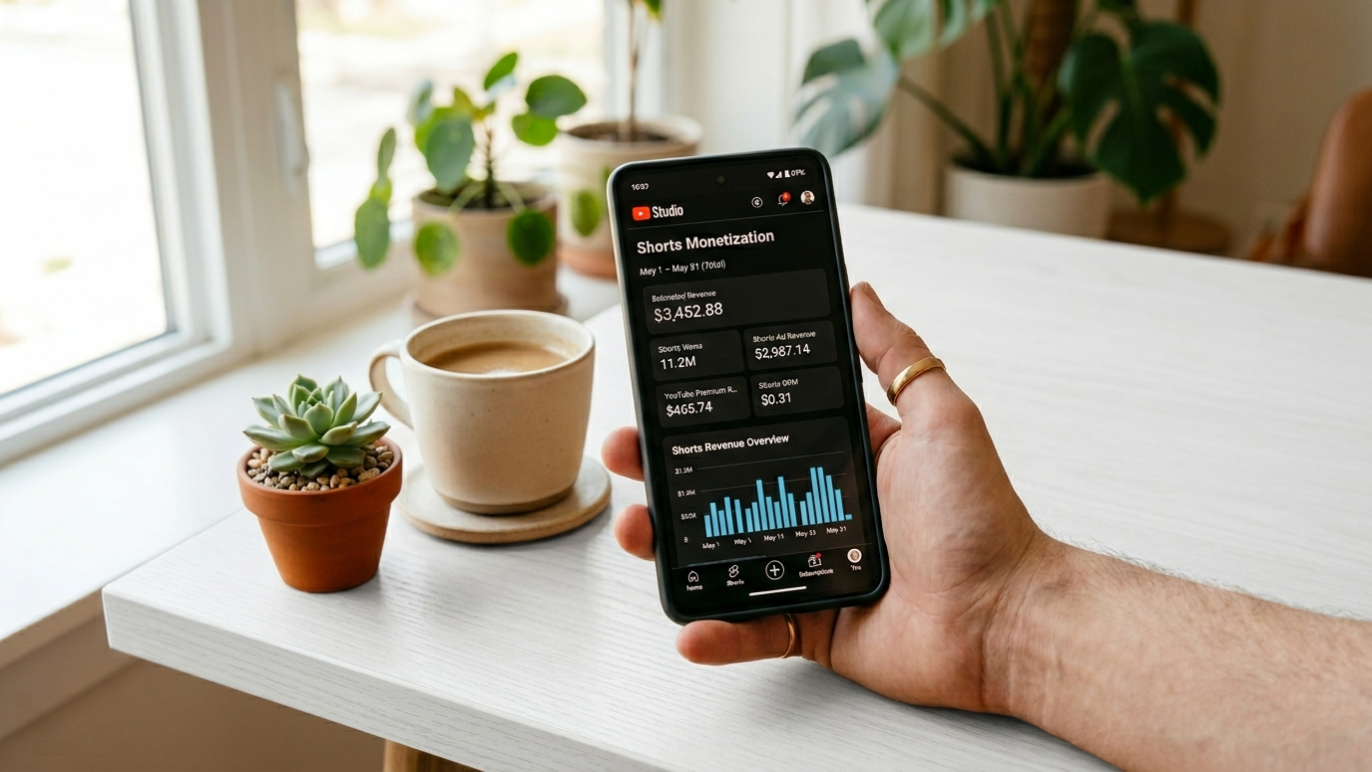
YouTube Shorts Monetization Made Easy To Maximize Earnings In 2026
Most creators on YouTube Shorts in 2026 are still treating the platform like a side hustle, uploading random clips, hoping something lands on the For You page, and wondering why the revenue dashboard barely moves. Here is what they are not being told: Shorts monetization is not about luck. It is about architecture.
YouTube has fundamentally redesigned how Shorts creators earn. The old model of relying solely on the Shorts Fund is gone. In its place is a multi-revenue ecosystem where RPM, watch-through quality, and strategic cross-promotion between Shorts and long-form determine whether you earn pennies or a full-time income. The creators who understand this shift are quietly building six-figure Shorts channels.
In this guide, we will walk through exactly how Shorts monetization works in 2026, how to maximize every revenue layer, and how to build a Shorts strategy that compounds over time.
How YouTube Shorts Monetization Works in 2026
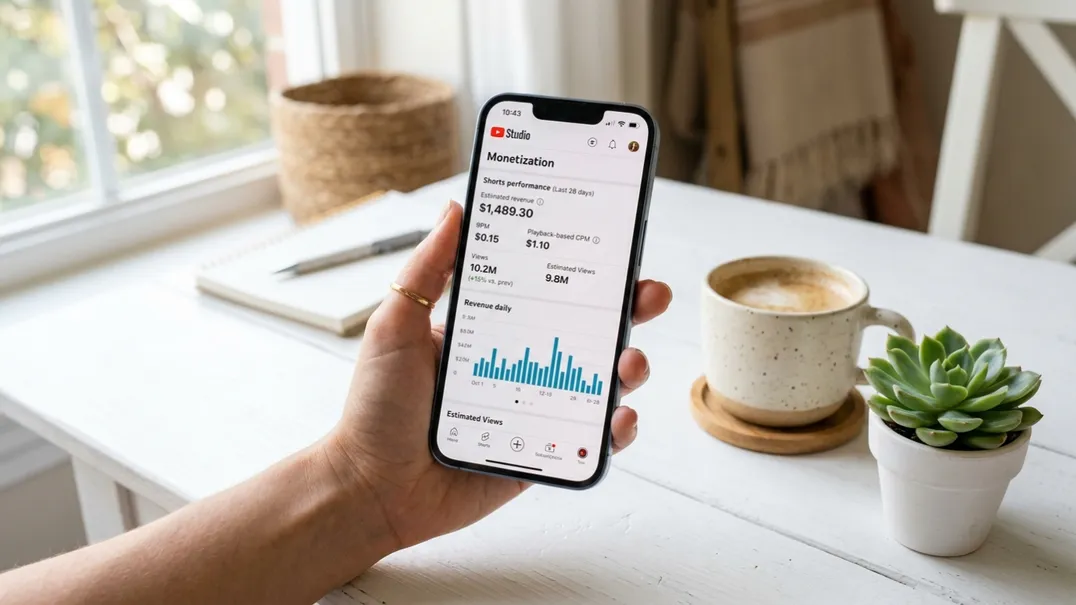
Since January 2023, Shorts have been included in the YouTube Partner Program (YPP), but the mechanics are different from long-form video ads. Instead of pre-roll or mid-roll ads, Shorts monetization operates through an ad revenue-sharing pool. Advertisers pay for placements between Shorts in the feed, and that revenue is distributed based on views and music usage.
The critical number to understand is your Shorts RPM. While long-form RPMs can range anywhere from $2 to $25 depending on niche, Shorts RPMs historically sat lower, often between $0.01 and $0.07 per thousand views. In 2026, however, the gap is narrowing. Premium advertisers are buying Shorts inventory at higher CPMs, and vertical commerce placements are driving up payouts in consumer-focused niches.
The Revenue Pool Formula
Here is the simplified math YouTube uses. The total ad revenue generated between Shorts in a region is calculated. From that pool, a portion is paid to music rights holders if their tracks are used. The remaining pool is split: YouTube keeps 45%, and creators collectively receive 55% based on their share of total monetizable Shorts views in that region.
Your actual payout depends on:
- How many total monetizable views your Shorts receive
- What percentage of your Shorts use copyrighted music (which diverts revenue to the music rights owner)
- Which country or region your viewers are located in (North America and Western Europe pay significantly more)
- What niche your content falls under (finance and business Shorts command higher RPMs than entertainment)
Step-by-Step: How to Get Your Shorts Monetized
Step 1: Meet the YPP Requirements
To monetize Shorts in 2026, channels need either:
- 1,000 subscribers and 10 million public Shorts views in the last 90 days, OR
- 1,000 subscribers and 4,000 public watch hours on long-form videos in the last 12 months
Most creators aiming for the Shorts path underestimate the 10 million view threshold. It sounds enormous, but a single viral Short can deliver 2-5 million views. The key is consistency: uploading 2-3 optimized Shorts daily builds cumulative view velocity fast. Use TubeHunt to identify which Shorts niches in your category are currently pulling the highest view counts.
Step 2: Enable Monetization Correctly
Once eligible, navigate to YouTube Studio → Monetization → Apply. You will need an AdSense account and to agree to the YPP terms. Critically, ensure your channel has zero active Community Guidelines strikes and that all content adheres to advertiser-friendly guidelines. Content that is borderline (even if it technically passes review) often receives limited or no ads.
7 Strategies to Maximize Shorts Earnings in 2026
1. Build a Direct Bridge to Long-Form
The highest-earning Shorts creators in 2026 are not relying on Shorts RPM alone. They use Shorts as a traffic engine to drive viewers to long-form videos where RPMs are 20-50x higher. If your Short averages $0.05 RPM and your long-form averages $8 RPM, every viewer you convert from a Short to a long-form video drastically increases your revenue per user.
Design Shorts that naturally tease a deeper topic. End with: "The full breakdown is on the main channel, link in the pinned comment." Make the long-form video impossible to resist.
2. Avoid Copyrighted Music
This is the silent killer of Shorts revenue. Every time you use a trending audio track, a portion of your revenue goes to the music rights holder. In some cases, 100% of the revenue from that Short is diverted. The solution is simple: use YouTube's Audio Library or原创 (original) sound design. Your RPM instantly increases because the revenue pool is not split.
3. Double Down on High-RPM Niches
Not all Shorts are monetized equally. If your content is in finance, business, technology, or health optimization, advertisers bid higher for your inventory. A finance Short with 500K views can earn more than a gaming Short with 5 million views. Use TubeHunt to map which niches in the Shorts feed are commanding premium CPMs in 2026.
4. Optimize for Watch-Through Rate
YouTube's monetization algorithm rewards Shorts that are watched in full. If viewers are swiping away at the 20% mark, the algorithm interprets your content as low quality and limits distribution, which directly impacts revenue. The first 1-2 seconds must hook immediately. No slow fades, no logos, no intro music. Start with the most compelling frame or statement.
5. Stack Affiliate Links
Shorts are perfect for low-friction affiliate marketing. Tools visible on screen, products mentioned in passing, templates or courses teased in captions, all drive clicks. Because Shorts are consumed rapidly, viewers make impulse decisions. A Short about budgeting apps with an affiliate link in the pinned comment can convert at 3-5% on 1 million views.
6. Build a Membership or Patreon Bridge
Several high-performing Shorts creators in 2026 are using vertical content to funnel audiences into paid memberships. Shorts provide the frequency and reach that long-form cannot match. Every third or fifth Short subtly references exclusive templates, scripts, or community access available behind a paywall.
7. License Your Shorts Content
News agencies, brands, and documentary producers license viral Shorts clips for re-use. If your Shorts generate consistently high engagement, platforms like Jukin Media and Viral Hog are actively purchasing content. This is an entirely separate revenue stream from ad revenue.
How Much Can You Realistically Earn?
Shorts earnings in 2026 vary dramatically by niche, geography, and consistency. Here is a realistic framework:
- Starting tier: $50–$200/month (100K–500K Shorts views, basic niche, standard geography)
- Growing tier: $500–$1,500/month (2M–10M Shorts views, mid-tier niche, some cross-promotion)
- Established tier: $3,000–$8,000/month (20M+ Shorts views, high-RPM niche, long-form bridge active)
- Elite tier: $15,000+/month (50M+ Shorts views, finance/business niche, affiliate + membership stacked)
The gap between tiers is not views. It is monetization architecture.
Common Shorts Monetization Mistakes
- Uploading without keyword optimization: Shorts titles and descriptions still impact search and discovery
- Relying only on Shorts RPM: the highest earners use Shorts as acquisition, not as the primary revenue source
- Using copyrighted music for viral appeal: it kills your revenue and risks strikes
- Inconsistent upload schedules: the algorithm rewards daily creators with sustained distribution
- Ignoring analytics: average view duration and swipe-away rate are monetization levers most never touch
FAQ
Can I monetize Shorts without 1,000 subscribers?
No. The YouTube Partner Program requires 1,000 subscribers as a baseline threshold, along with either 10 million Shorts views or 4,000 watch hours on long-form content.
Do I need an AdSense account specifically for Shorts?
Yes. You need an active and approved AdSense account linked to your YouTube channel to receive any earnings from the Shorts revenue pool.
Does deleting old Shorts hurt monetization?
Deleting monetized Shorts removes future potential revenue from those videos, but it does not penalize your channel. However, if a deleted Short was driving traffic to long-form content, removing it may lower your overall session revenue.
How long does it take to get approved for YPP?
Typically 2–4 weeks after applying, assuming all requirements are met and there are no Community Guidelines or copyright issues on your channel.
Is it better to focus on Shorts or long-form for revenue?
For maximum revenue, you need both. Shorts provide volume and discovery. Long-form provides RPM depth. The creators winning in 2026 treat them as a system, not as separate formats.
Use TubeHunt to analyze which Shorts niches are currently generating the highest RPMs, view velocity, and advertiser competition in your target category. Build your strategy on data, not assumptions.
TubeHunt.io: The best niche finder for youtube.
Related: More guides on our blog · Become an affiliate · Compare TubeBuddy · Compare VidIQ